About Programs Why Us Methodology Qira'at Enroll
A Sacred Science · Transmitted Without Interruption
علم القراءات العشر

The Science of
Qira'at

The Ten Canonical Recitations of the Holy Quran

Among the most exalted disciplines of the Islamic sciences — the study of the ten authenticated modes of Quranic recitation, each traced in an unbroken chain to the Prophet Muhammad ﷺ himself.


قَالَ النَّبِيُّ صَلَّى اللَّهُ عَلَيْهِ وَسَلَّمَ

إِنَّ هَذَا الْقُرْآنَ أُنْزِلَ عَلَى سَبْعَةِ أَحْرُفٍ فَاقْرَءُوا مَا تَيَسَّرَ مِنْهُ

The Prophet ﷺ said

"Verily, this Quran has been revealed upon seven ahruf — so recite whichever of them is easiest for you."

Narrated by 'Umar ibn al-Khattab (رضي الله عنه) · Sahih al-Bukhari & Sahih Muslim

What Are the Qira'at

Ten Modes,
One Revelation

The Qira'at al-'Ashr (القراءات العشر) are the ten canonical modes of reciting the Holy Quran, each transmitted through an unbroken chain of master reciters back to the Prophet Muhammad ﷺ. They are not textual variants — every one of them is an authenticated, divinely revealed mode of recitation.

Classical scholars established three conditions for a recitation to be accepted as an authentic Qira'ah:

  • 01 Agreement with the rules of Arabic grammar in at least one accepted reading
  • 02 Conformity with the written Uthmani Mushaf, even if only approximately
  • 03 An authentic, unbroken chain of transmission — whether mutawatir or at least mashhur

The variations between the Qira'at include differences in vowelisation (harakaat), degrees of elongation (madd), certain consonantal readings, and phonetic characteristics such as idgham, imalah, and tashil — each reflecting a subtlety of the Quran.

Guardians of the Science

A Legacy Preserved
Across Centuries

245 AH · Baghdad
Imam Ibn Mujahid
الإمام ابن مجاهد

The first scholar to formally canonize seven specific Qira'at in his landmark work Kitab al-Sab'a fi al-Qira'at. His selection of the Seven Imams — one from each of the major Islamic cities — became the foundation upon which all subsequent scholarship was built.

371–444 AH · Denia, al-Andalus
Imam Abu Amr al-Dani
الإمام أبو عمرو الداني

The namesake of this institute and one of the most prolific authorities in Quranic sciences. His Al-Taysir fi al-Qira'at al-Sab' and Al-Muqni' systematized the seven Qira'at and established the written foundations of the science. He transmitted more than 500 works and is considered one of the greatest Muqri'een of all time.

538–590 AH · Al-Andalus
Imam al-Shatibi
الإمام الشاطبي

Imam al-Qasim ibn Firruh al-Shatibi composed the celebrated Hirz al-Amani wa Wajh al-Tahani — a 1,173-verse poem versifying the seven Qira'at based on Imam al-Dani's Al-Taysir. Known universally as al-Shatibiyyah, this poem became the primary text memorised by every student of the Qira'at and remains so to this day.

751–833 AH · Damascus · Cairo
Imam Ibn al-Jazari
الإمام ابن الجزري

The undisputed Seal of the Muqri'een (خاتمة المحققين في علم القراءات). Imam Ibn al-Jazari expanded the canonical Qira'at from seven to ten, composed the comprehensive Tayyibat al-Nashr fi al-Qira'at al-'Ashr, supplemented the seven with his Al-Durrah al-Mudhiyyah, and authored the indispensable Al-Nashr fi al-Qira'at al-'Ashr — a two-volume encyclopedia of the science. His chains of transmission are the primary pathways through which the Qira'at are transmitted today.

The Foundational Texts

The Three Mutoon

Every student of Qira'at must master these three classical poems. They form the complete curriculum of the Qira'at al-'Ashr — from the seven to the ten, in the shorter and longer transmission paths.
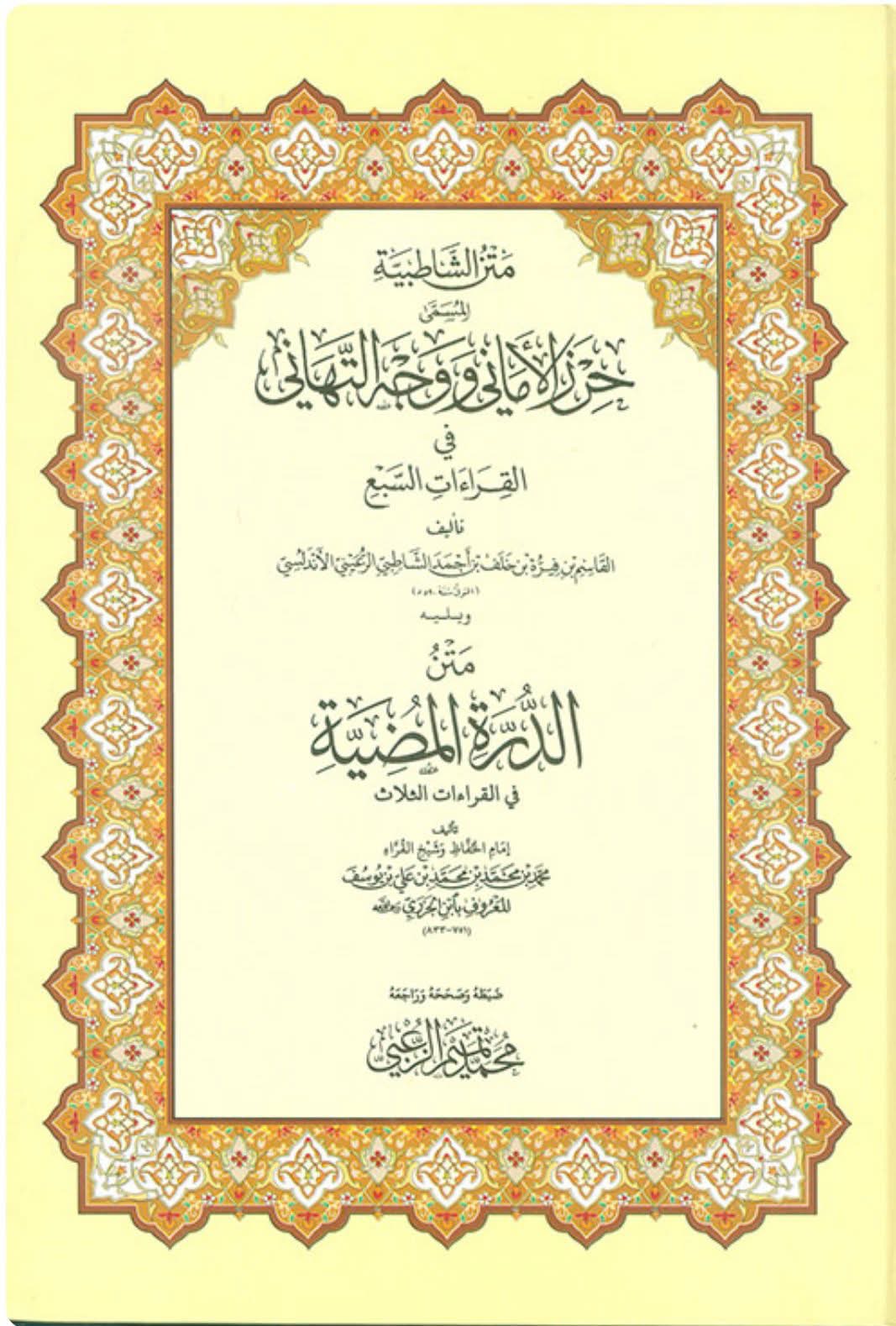
Matn al-Shatibiyyah manuscript
01
حرز الأماني ووجه التهاني
Hirz al-Amani
wa Wajh al-Tahani
Imam Abu al-Qasim al-Shatibi · d. 590 AH

Known universally as al-Shatibiyyah, this 1,173-verse poem in the bahr al-tawil meter is the entry point for every student of Qira'at. It versifies the seven Mutawatir Qira'at — the recitations of Nafi', Ibn Kathir, Abu 'Amr, Ibn 'Amir, 'Asim, Hamzah, and al-Kisa'i — through the shorter chain of transmission.

Al-Shatibi encoded the content through an intricate letter-cipher system, making the poem simultaneously a memory aid and a scholarly reference. Mastery of al-Shatibiyyah is the prerequisite for all further study in the science.
7 Qira'at 1,173 Verses al-Qira'at al-Sughra
Al-Durrah al-Mudhiyyah manuscript
02
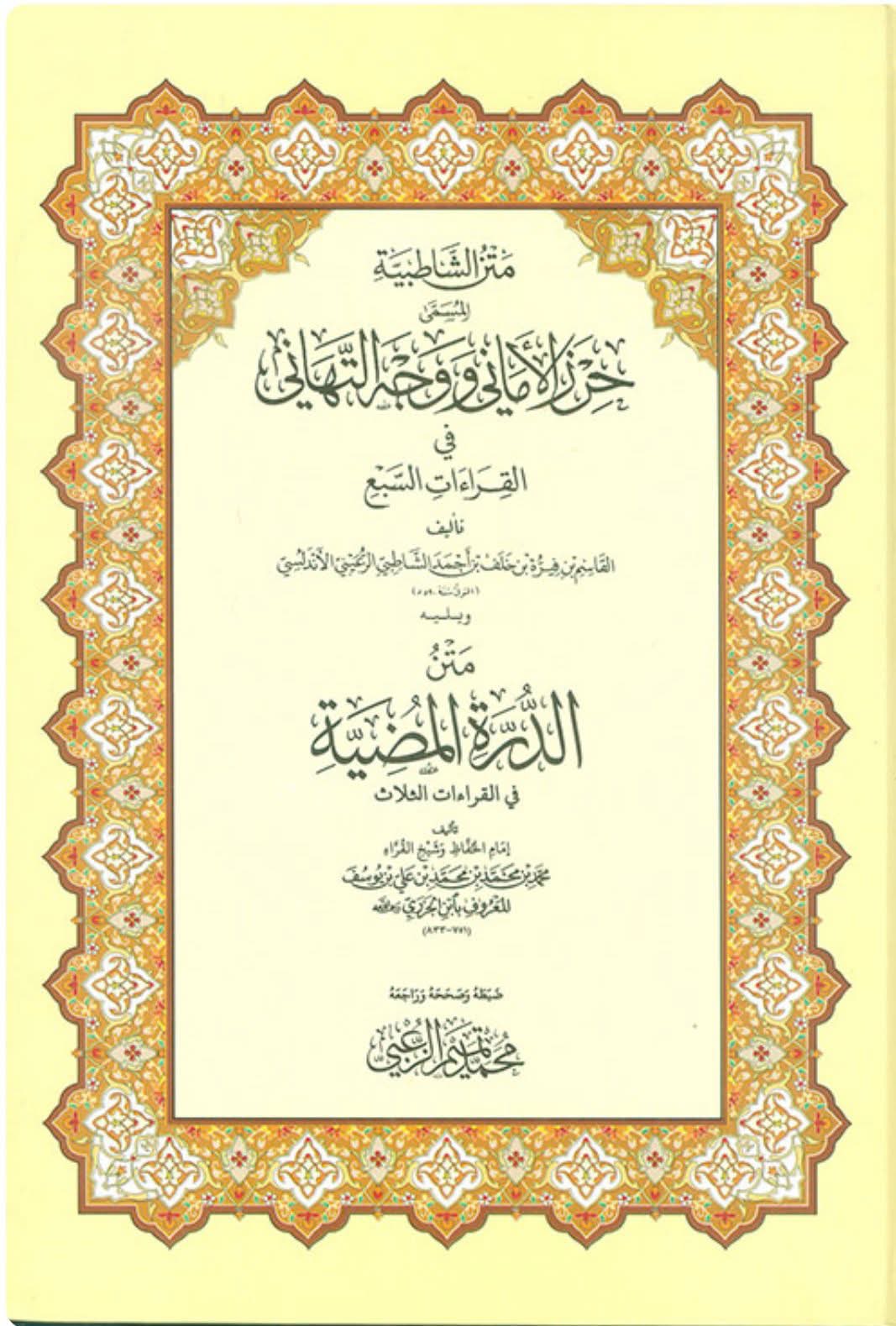
الدرة المضية في القراءات الثلاث المرضية
Al-Durrah
al-Mudhiyyah
Imam Ibn al-Jazari · d. 833 AH

The "Radiant Pearl" — a ~240-verse poem composed by Imam Ibn al-Jazari as a direct supplement to al-Shatibiyyah. It covers the three additional Qira'at not found in the Seven: the recitations of Abu Ja'far al-Madani, Ya'qub al-Hadrami, and Khalaf al-'Ashir.

Together, al-Shatibiyyah and al-Durrah constitute Qira'at al-Ashr al-Sughra — the complete ten Qira'at through the shorter transmission paths. This is the level at which most students receive their Ijazah al-Ashr.
3 Additional Qira'at ~240 Verses Completes the Ten
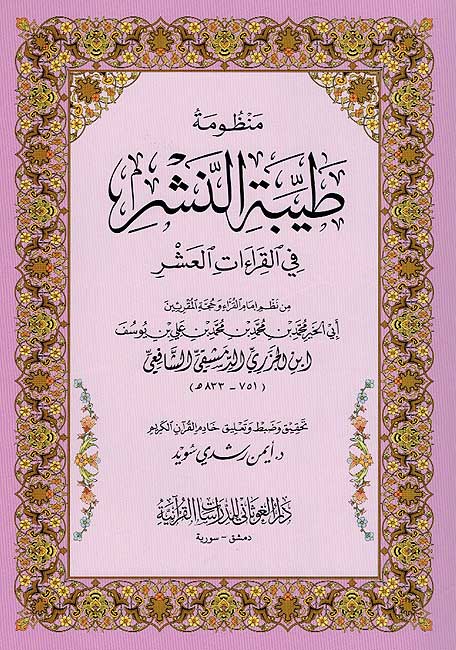
Tayyibat al-Nashr manuscript
03
طيبة النشر في القراءات العشر
Tayyibat al-Nashr
fi al-Qira'at al-'Ashr
Imam Ibn al-Jazari · d. 833 AH

The pinnacle of the science. Ibn al-Jazari's ~1,000-verse masterpiece covers all ten Qira'at in their full transmission paths — every narration (riwayah) and every sub-path (tariq) — constituting Qira'at al-Ashr al-Kubra.

Where al-Shatibiyyah covers the seven through two paths each, Tayyibat al-Nashr covers all ten through their complete transmission trees. Holding an Ijazah through al-Tayyibah is among the highest honours in Quranic scholarship — a distinction held by only a handful of living scholars worldwide.

10 Qira'at ~1,000 Verses al-Qira'at al-Kubra The Pinnacle
Begin Your Journey

Study the Qira'at
with an Ijazah-Holder

Our instructors hold authenticated chains of transmission in Qira'at al-Ashr al-Sughra and al-Kubra. Begin your journey under qualified scholarship — wherever you are in the world.